
 Image 1 of 2
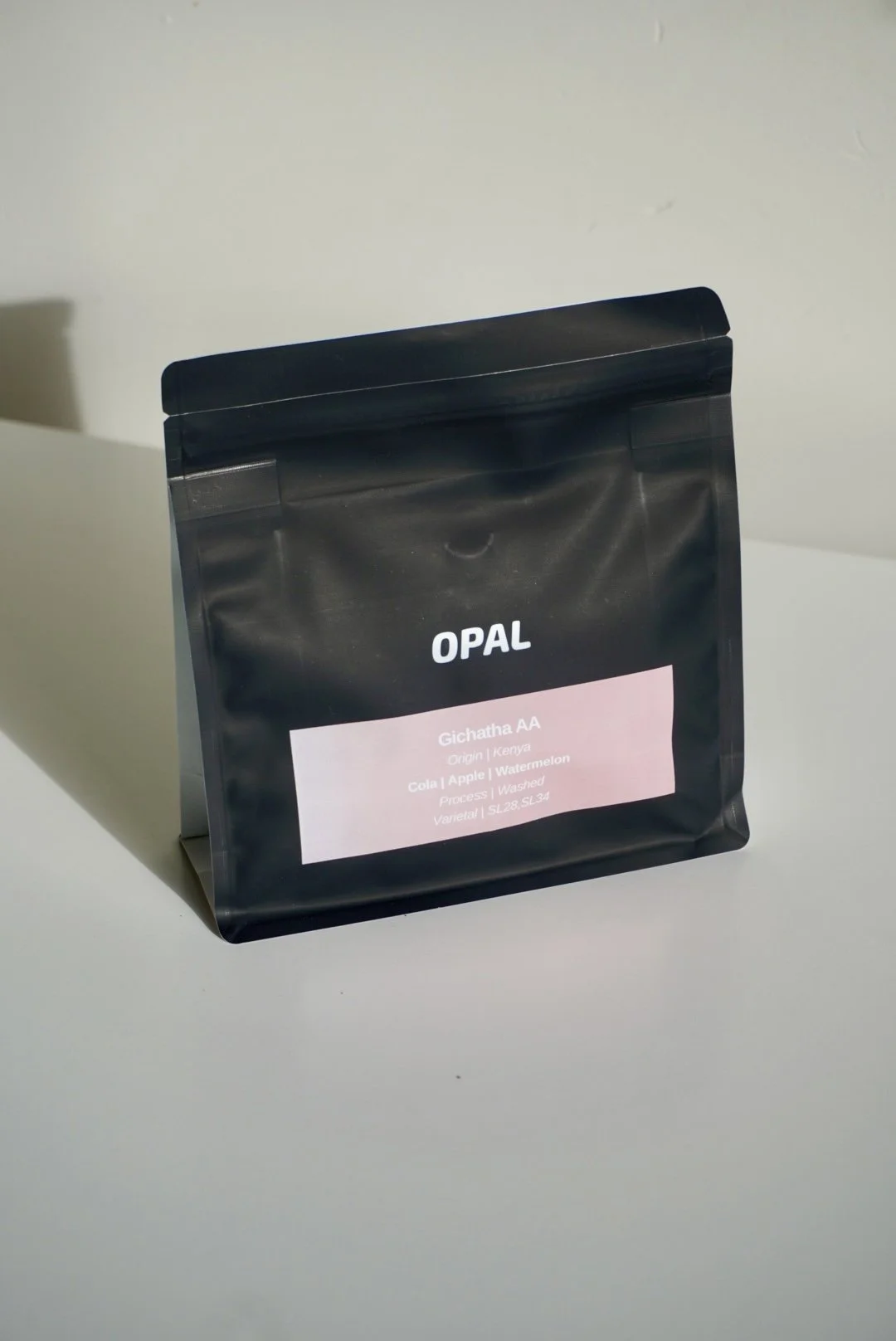 Image 2 of 2
Established in 1968 shortly after Kenya’s
independence, the Gichatha-ini Washing
Station carries deep historical roots. The name
originates from the colonial era, when locals were
organized into villages called Gichagi.
The washing station is located in Nyeri County, processing cherries from farms situated between 1,700 and 1,800 MASL.
Nestled between the southern slopes of Mt. Kenya and the foothills of the Aberdare Range, the high elevation ensures a
cool climate.
This environment slows cherry maturation, allowing for a higher concentration of
sugars and a more complex flavor profile.
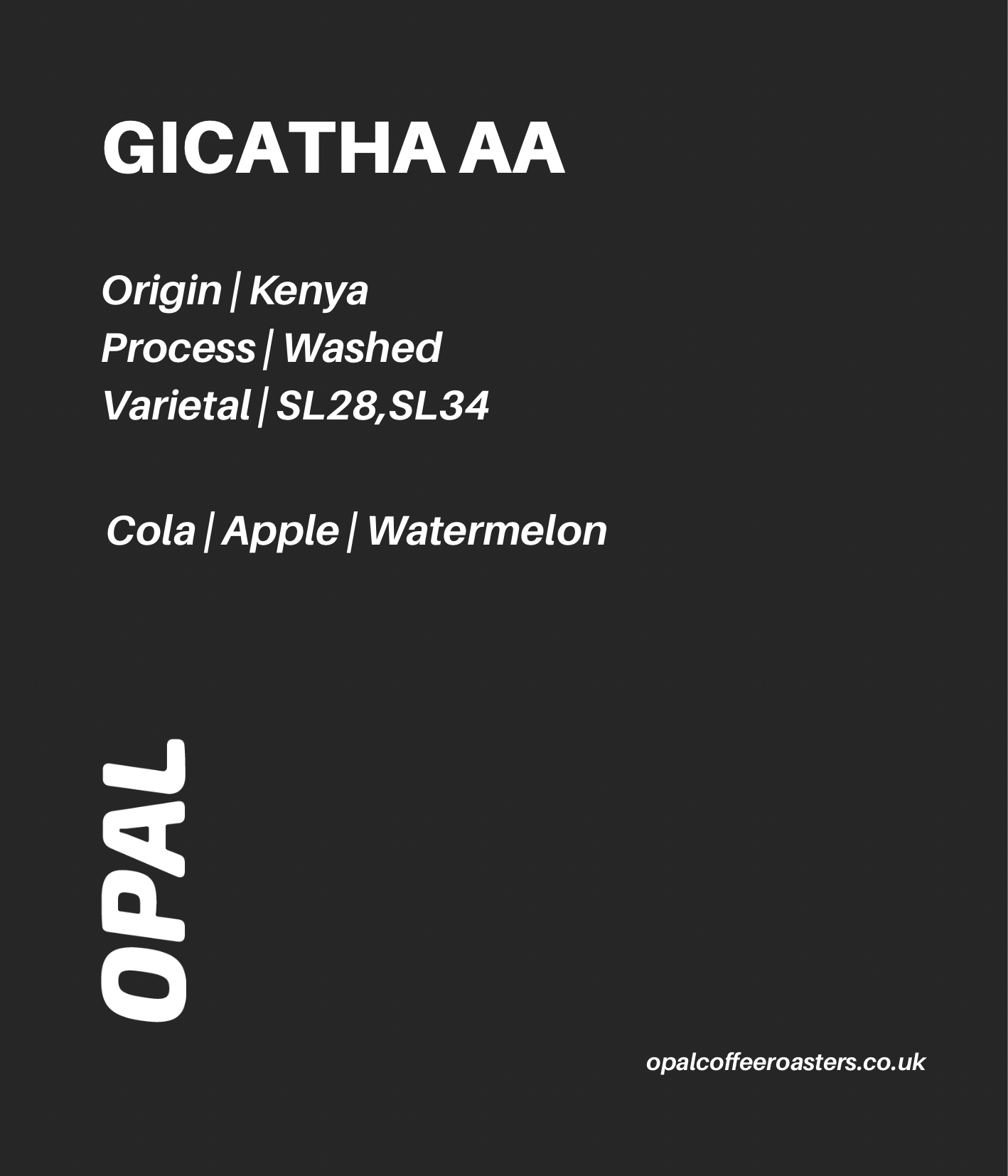
Farmers primarily grow traditional SL varieties, which are world-renowned for their superior cup quality and vibrant acidity.
Altitude
1700 -1800 masl
Nyeri county Kenya
Cherries are meticulously hand-picked at peak ripeness. Only the deep red cherries are delivered to the station, ensuring a uniform and high-quality, with farmers selectively harvesting only ripe cherries.
The factory uses a fully washed, wet processing method. Cherries are sorted, floated, pulped, fermented for roughly 72 hours, and dried on raised beds for up to 21 days
Established in 1968 shortly after Kenya’s
independence, the Gichatha-ini Washing
Station carries deep historical roots. The name
originates from the colonial era, when locals were
organized into villages called Gichagi.
The washing station is located in Nyeri County, processing cherries from farms situated between 1,700 and 1,800 MASL.
Nestled between the southern slopes of Mt. Kenya and the foothills of the Aberdare Range, the high elevation ensures a
cool climate.
This environment slows cherry maturation, allowing for a higher concentration of
sugars and a more complex flavor profile.
Farmers primarily grow traditional SL varieties, which are world-renowned for their superior cup quality and vibrant acidity.
Altitude
1700 -1800 masl
Nyeri county Kenya
Cherries are meticulously hand-picked at peak ripeness. Only the deep red cherries are delivered to the station, ensuring a uniform and high-quality, with farmers selectively harvesting only ripe cherries.
The factory uses a fully washed, wet processing method. Cherries are sorted, floated, pulped, fermented for roughly 72 hours, and dried on raised beds for up to 21 days